A Brief Introduction to Ayurveda

Updated: May 16
An ancient system of healing that sees you as a whole person — not just a set of symptoms.
Have you ever noticed that some people thrive on a busy schedule while others burn out completely? That some people seem to run warm and intense, while others are steady and grounded? That the same diet leaves one person energized and another feeling sluggish?
Ayurveda has been asking these questions for over 5,000 years — and it has answers.
Originating in India, Ayurveda (pronounced aah-yur-VAY-dah) is one of the world's oldest holistic healing systems. The word itself comes from Sanskrit: ayur meaning life, and veda meaning knowledge or wisdom. So at its most literal, Ayurveda is simply the knowledge of life.
"Ayurveda doesn't ask what disease you have. It asks who you are — and how you're living."
It starts with the idea that we're all different
Modern medicine often looks for universal solutions — one treatment, one protocol, one recommendation for everyone. Ayurveda takes a different approach. It recognizes that we each come into the world with a unique constitution, or prakrti, and that what keeps us healthy, vibrant, and balanced is deeply personal.
This constitution is made up of three fundamental energies called Doshas — Vata, Pitta, and Kapha. Think of them as biological blueprints. Most of us are a combination of all three, but we each have a dominant Dosha (or two) that shapes how we think, feel, digest, sleep, and move through the world. Understanding your Dosha can lead to better health, improved well-being, and a deeper connection to yourself. In this post, we will explore how to identify your Dosha and what it means for your lifestyle.

What Are Doshas?
In Ayurveda, Doshas are derived from the five elements: ether (or space), air, fire, water, and, earth. Each Dosha represents a combination of these elements and influences our physical, emotional, and mental traits. The three Doshas are:
Vata: Composed of ether and air, Vata is associated with movement, creativity, and flexibility. People with a dominant Vata Dosha tend to be energetic, quick-thinking, and enthusiastic but may also experience anxiety and restlessness.
Pitta: Made up of mostly fire and a small amount of water, Pitta is linked to transformation, metabolism, and intensity. Those with a strong Pitta Dosha are often ambitious, focused, and passionate but can become irritable or overly competitive when out of balance.
Kapha: Combining earth and water, Kapha is related to stability, structure, and nourishment. Individuals with a predominant Kapha Dosha are typically calm, nurturing, and loyal but may struggle with lethargy and attachment if they are not balanced.
Why Identifying Your Dosha Matters
Understanding your Dosha is crucial for several reasons:
Personalized Health: Knowing your Dosha helps tailor your diet, exercise, and lifestyle choices to suit your unique needs.
Emotional Balance: Recognizing your Dosha can provide insights into your emotional tendencies and help you manage stress more effectively.
Preventive Care: By understanding your Dosha, you can take proactive steps to maintain balance and prevent health issues before they arise.
How to Identify Your Dosha
Identifying your Dosha involves self-reflection and observation. Here are some practical steps to help you determine your dominant Dosha:
1. Self-Assessment Questionnaire
Use the quiz on this website to help determine your Dosha. Remember, answer each question based on your natural inclination from birth onwards - not temporary habits.
2. Observe Physical Traits
Your physical characteristics can offer clues about your Dosha:
Vata: Individuals often have a slender build, dry skin, and cold hands and feet. They may also have irregular digestion and experience fluctuations in weight.
Pitta: Those with a Pitta Dosha usually have a medium build, warm skin, and a strong appetite. They may sweat easily and have a tendency toward inflammation or acidity.
Kapha: Kapha individuals tend to have a larger, sturdier build, smooth skin, and a steady metabolism. They may experience weight gain more easily and have a slower digestion.
3. Analyze Personality Traits
Your personality can also indicate your Dosha:
Vata: Creative, spontaneous, and quick to adapt, Vata types may also be prone to anxiety and indecisiveness.
Pitta: Goal-oriented, assertive, and passionate, Pitta individuals can become easily frustrated or angry when things don’t go their way.
Kapha: Nurturing, patient, and reliable, Kapha types may struggle with inertia and resistance to change.
4. Consider Your Lifestyle Preferences
Your lifestyle choices can reflect your Dosha:
Vata: You may prefer light, airy environments and enjoy activities that stimulate your mind, like reading or brainstorming.
Pitta: You might thrive in competitive settings and enjoy activities that challenge you, such as sports or leadership roles.
Kapha: You may prefer calm, soothing environments and enjoy nurturing activities like cooking or gardening.
Balancing Your Dosha
Once you have identified your Dosha, the next step is to maintain balance. Each Dosha has specific recommendations for diet, lifestyle, and self-care practices.
Vata Balance
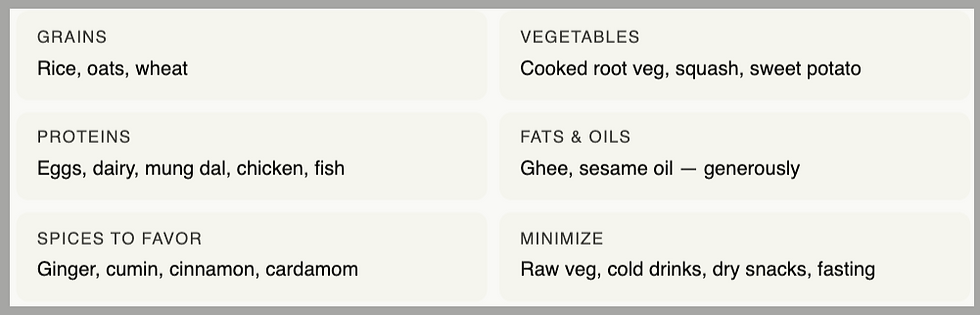
To balance Vata, focus on grounding and warming practices:
Diet: Incorporate warm, moist foods like soups, stews, and cooked grains. Favor sweet, sour, and salty flavors.
Lifestyle: Establish a routine to create stability. Engage in calming activities like yoga or meditation.
Self-Care: Use warm oils for massage and prioritize rest and relaxation.
Pitta Balance
To balance Pitta, aim for cooling and calming practices:
Diet: Favor cooling foods like salads, fruits, and dairy. Avoid spicy and acidic foods.
Lifestyle: Incorporate activities that promote relaxation, such as swimming or nature walks.
Self-Care: Use cooling essential oils and practice mindfulness techniques to manage stress.
Kapha Balance
To balance Kapha, focus on stimulating and energizing practices:
Diet: Choose light, dry foods like salads, legumes, and whole grains. Limit heavy and oily foods.
Lifestyle: Engage in vigorous exercise and activities that challenge you, like hiking or dancing.
Self-Care: Incorporate invigorating practices like dry brushing and energizing essential oils.
Ayurveda is not about perfection — it's about balance
One of the most beautiful things about Ayurveda is that it doesn't set one ideal standard for everyone. It doesn't say "wake up at 5am" or "eat this specific diet" for all people. Instead, it offers principles and practices, and asks you to tune in to your own body to find what works for you.
Health in Ayurveda isn't the absence of disease — it's a state of harmony: between your body, mind, and spirit; between you and the rhythms of nature; between your daily habits and the deeper needs of your unique constitution.
This means that the foods you eat, the way you structure your day, how you exercise, and even how you care for your skin can all be informed by Ayurvedic wisdom. It's practical, it's personal, and it's surprisingly accessible — even for complete beginners.
Conclusion
Identifying your Dosha is a powerful step toward understanding yourself and enhancing your well-being. By recognizing your unique traits and making informed lifestyle choices, you can achieve a harmonious balance that supports your physical and emotional health.
Take the time to explore your Dosha and implement the recommendations that resonate with you. Remember, Ayurveda is a journey of self-discovery, and every step you take brings you closer to a healthier, more balanced life.
As you embark on this journey, consider keeping a journal to track your observations and experiences. This practice can deepen your understanding of your Dosha and help you make adjustments as needed. Embrace the wisdom of Ayurveda and unlock the potential for a vibrant, fulfilling life.

Comments